

When the way you work stops working
If you spend enough time on LinkedIn (and if you work anywhere near startups, you probably do), you’d think a company runs on two things: announcements and stamina. There’s the raise, the new hire, the office move and the obligatory “thrilled to share”, completed with a carefully angled photo and a paragraph about the journey. Somewhere in between are the posts about midnight finishes, 80-hour weeks and weekends spent heads down, usually written as if that’s simply what it takes.
To be fair, the milestones deserve the attention (we post our share of them too). The drive and the curiosity it takes to back an idea and see it through are a big part of what makes this world so exciting. What rarely makes the feed is the other side of it: the founder who can’t remember the last weekend they properly switched off, the manager who has become the person everyone goes to when something goes wrong, the team moving at a pace that was supposed to be temporary six months ago.
Maybe that's the problem. We've got so used to being stretched thin that we barely notice it anymore. And when the subject does come up, it tends to arrive through the lens of optimisation: better sleep scores, colder plunges, a tighter morning routine, and the latest supplement promising to give us an extra edge. Some of that helps, but it treats pressure as something to optimise your way out of when a lot of it is built into how the business runs.
So in light of World Mental Health Day, LUNA teamed up with We Are Charlotte to look at what sits behind the milestones: what work can take out of teams, and what happens when the way you've been working stops working. We spoke to four people who know a thing or two about this world. Rob Skillington, co-founder of Chronosphere, which reached unicorn status in less than three years; Fiona Marshall, co-founder of Cario, who has helped scale the Melbourne-based freight tech business across Australia and New Zealand; Melissa Bickford, a Salesforce director whose career has taken her through fast-growing startups across New York, London and San Francisco; and Janey Martino, a serial entrepreneur who co-founded Smiling Mind, built and exited multiple startups, and is now CEO of KIC.
You might expect a piece like this to be mostly about burnout, and some of it is, but what came through more clearly was how much the experience of pressure changes as a company grows. What you can absorb, fix or simply work around in the early days becomes harder to sustain as the team gets bigger, the stakes get higher and more people depend on you. The habits that help you get through the first stage of growth aren’t always the ones that help you through the next.
At first, you can just fix it
When a company is small, there usually isn’t much choice. You sell, hire, fix the deck, chase invoices, answer customer emails and deal with whatever else lands that day. Being across everything is part of getting the business off the ground, and for a while it works surprisingly well.

Rob Skillington has been through that stage and well out the other side. He grew up in Melbourne, met Martin Mao while they were both working at Microsoft in the US, and the pair went on to build Uber’s internal metrics platform before starting Chronosphere in 2019. “Early on, if something isn’t working, you can normally just get involved and fix it,” he says. “There are few enough people that you can have context on almost everything, and your judgement can translate pretty directly into what gets built or done.” The catch is that businesses tend to outgrow those habits faster than anyone changes them, and for Rob that’s where things got heavier than he expected: “the people and organisational side, without question.”
“As you scale, you can’t operate that way anymore,” he says. “You’re increasingly relying on other leaders to take your intent, add their own judgement, and then have that flow through another layer or two of the organisation. Getting that right is much harder than I expected.” There isn’t always a big moment when this becomes obvious. More often it creeps up on you: the calendar fills, more people need decisions from you, and things that once affected three people now affect thirty.
Fiona Marshall knows the feeling well. She co-founded Cario, a freight technology company, and has led it as the business and the team have grown. When we asked whether the way they worked had ever stopped being sustainable, her answer came quickly: “Often! We constantly find as we are growing we need to keep re-benching and improving our go-to-market and structure.”
That rather ruins the tidy version of the story, the one where a company hits a turning point, sorts itself out and settles into a new shape. In Fiona’s experience it just keeps happening, and the work of changing how the business runs never quite finishes.
Influence, not control
Some of what changes is harder to put your finger on. “When our business was small, it was simple to control messaging in the team, or direct the ship a certain way,” Fiona says. “As we’ve got bigger, messaging and momentum feels less in our direct control, and more often in a number of key people in the team who direct and contribute to this. We can influence it, but not control it.”
At the same time, the decisions themselves get heavier. There’s more complexity, she says, and it “has made trade-off decisions much harder. So what was a simple decision now often has downstream effects that we may not be able to solve.” So the calls get bigger at roughly the rate your grip on them loosens, which is about as stressful as it sounds.
Influence also runs on example far more than instruction. You might genuinely mean it when you tell someone they don’t need to reply to your 10.30pm Slack message, but they still saw you send it at 10.30pm. People notice who takes leave and who doesn’t, what gets treated as urgent and what happens when somebody says they’re overloaded. Over time, those small behaviours say a lot about what the company considers normal.
The tricky part is that the pressure isn’t necessarily deliberate. Often, leaders are doing the opposite, taking more on to protect the team or to fix a problem before anyone else has to worry about it. But pressure leaks out anyway. If everything is urgent at the top, everything starts to feel urgent further down, and if the busiest person in the company never switches off, it gets harder for anyone else to believe they can.
That’s also why telling a team to “look after themselves” rarely changes much. If the way the business runs still rewards constant availability and heroic workloads, people will respond to that far more than they respond to a wellbeing policy.
When everything is urgent
So far, we’ve been looking at pressure from the point of view of founders, but it doesn’t stay there. For the people inside the team, it can feel different: everything is moving quickly, everyone is expected to keep up, and slowing down can feel like falling behind.

Melissa Bickford knows that environment well. Her career has taken her through banking, startups and listed SaaS companies, and she’s now a director at Salesforce in London, where she also leads a weekly run club and has seven marathons under her belt, including Boston!
So there’s some self-awareness in what she now looks at differently: “the glorification of pace, which is funny for someone who runs and likes to chase a pace.” In fast-growing startups, she says, “there can be this feeling that everything is urgent, especially when you’re younger.” Everyone is expected to be all in, across global teams and around the clock, and “being constantly available is somehow this evidence that you care more and you’re more worthy.” She did it too, and wore it “as a badge of honour”.
This is what the 10.30pm message looks like from the other end. Nobody needs to ask for it, and being available simply becomes the way you show you care. Looking back, she doesn’t think it worked. “I don’t think operating at 100 miles per hour indefinitely produces better work, because it can’t,” she says. “It often just produced exhaustion in me, in others, and we would make worse decisions. We would get sick. We would burn out over time.”
She’s quick to add that she’s “very ambitious and very pro high performance”. What she’s against is the toxic startup cliché, and her biggest lesson is that “you can work incredibly hard and care enormously about the outcome without treating every problem like an emergency.” Part of the fix, from where she sat, was structural. Heroics and people figuring it out as they go “can be really brilliant very early on,” she says. “But eventually, you do need proper processes. You need clear ownership for the protection of everyone.” That’s ownership seen from inside the team: it’s what stops the same few people quietly carrying everything.
Her own working day looks very different now. “I no longer equate hours worked with impact. Absolutely not,” she says. That doesn't mean every day looks the same. The day we spoke happened to be a run club day, so she was out the door at five on the dot. On others, she's in early to chase a big target or finish a big project. The difference now, she says, is control: “I'm very in control of my schedule, which I was not earlier in my career.”
"Eventually, you do need proper processes. You need clear ownership for the protection of everyone."
— Melissa Bickford, Director, Salesforce
“There are seasons in any high-performing business, end of quarter is an obvious one… I'm absolutely up for that when it matters,” she says. “But a sprint should be a sprint, not your permanent operating model. The flexibility has to work both ways. If I'm asking more of myself or my team during those intense periods, there also needs to be space to take the foot off the accelerator when the moment allows for it.”
For her, that's what sustainable high performance looks like: “Work hard, care deeply and show up when it counts but ultimately, work to live, not the other way around.”
Getting out of the way
There’s an uncomfortable idea underneath much of what Rob and Fiona describe: a lot of what founders call high standards can turn out to be a reluctance to let go. Seeing everything, signing off on everything and stepping in whenever something isn’t quite right feels like caring about quality. Past a certain size, it mostly makes you the bottleneck.
The obvious fix is to hire more senior people, and it doesn’t always work. “Adding senior leadership doesn’t automatically make this easier,” Rob says. “Rather than creating leverage, sometimes it can create a cloud of conflicting judgements between the founders, executives, leaders and teams.”
.png)
His advice is to start with yourself: work out what you’re unusually good at and what you enjoy, then build supporting leadership around it. The risk sits in the areas you care about most. “Avoid bringing on an executive or top senior leader in an area you have strong opinions on where you will create two chefs in the kitchen,” he says.
His suggestion is to hire a senior people leader for the function and keep providing the vision and direction yourself. Handing more over can come later, once the company has made enough progress to make those decisions deliberately.
"Avoid bringing on an executive or top senior leader in an area you have strong opinions on where you will create two chefs in the kitchen."
— Rob Skillington, Co-founder, Chronosphere
Hiring the right people is half of it. The other half is letting them get on with it. At Cario, what’s made things feel more sustainable, Fiona says, is “hiring different people than our personalities. Also getting out of the way. Letting people do their job.”
If you’ve spent years being the person who knows the business better than anyone else, that’s easier said than done. There’s identity wrapped up in being needed (and, if we’re honest, some pride in handling more than everyone else). Stepping back can feel suspiciously like becoming less useful.
If every contract still needs your approval, you might need a better process. If nobody can make a decision while you’re away, someone probably needs more ownership. If the same few people are constantly picking up extra work, you may need another person. And if nobody knows what the business can afford, better visibility over the numbers might remove more stress than another wellbeing app ever could.
Then there are the calls nobody wants to make. “The other heavy part is making changes when someone who was exactly right for one stage of the company isn’t right for the next,” Rob says. “That’s incredibly difficult emotionally, particularly if you have a leadership team that’s even slightly conflict-averse. But avoiding those decisions usually makes them much more painful later.”
Some things stop looking impressive
Some of the hardest things to let go of are the ones that made the early days exciting. Fiona used to see chaos and constant pivoting as part of the deal. “In the beginning chaos is everywhere, and you have to be agile to manage this,” she says. “I used to think it was normal and we would all thrive on the excitement of change and growth.”
"Hiring different people than our personalities. Also getting out of the way. Letting people do their job.
— Fiona Marshall, Co-Founder, Cario
Being agile for customers mattered then and still does. But as the business has grown, “the chaos and agility isn’t sustainable. We need order, control and processes. Standardisation.” She’s frank about why that shift is hard, “especially if you are an entrepreneur and not naturally interested in these ‘boring’ parts!” What she’s after is order that doesn’t cost the business the agility its customers value. It’s a different kind of control from the one she’s let go of: less over every decision, more over how the business runs.
It’s easy to see why the chaos sticks around. There’s energy in building something from nothing, and a late night with a small team trying to get something over the line can become the story everyone laughs about later. It stops being funny when the exception becomes the norm. Working late occasionally is very different from being permanently reachable, and a difficult month is very different from a year where everyone is exhausted.
Of course, difficult periods are inevitable in any business. There will be launches, fundraises, tough quarters and problems nobody saw coming. Sometimes work will take more than you’d like to give it. The problem is when one sprint rolls into the next until nobody can remember what a normal week was supposed to feel like.
On your own terms
Janey Martino has spent two decades building, scaling and selling businesses across media, marketing tech and fintech. She co-founded Smiling Mind, the not-for-profit mental health app that has introduced more than nine million Australians to preventative mental health tools, and is now CEO of KIC, the popular wellness and fitness app.

Even so, her first few startups ran on late nights. “I used to work until all hours, even though I am absolutely a morning person and am far less effective of an evening,” she says. Sleep went, and so did exercise and the other things that kept her well, because that seemed to be what getting the work done required.
“Now I still work hard but much more on my terms,” she says. “I know that if I am not in optimal health, that is not of any benefit to the business.”
In practice that means following her body clock. She gets up early and starts with breathwork or meditation, then a long walk with her dog, and all of it is non-negotiable. If there’s work left over, she doesn’t stay up to finish it. She comes back to it fresh the next morning, once the routine that “benefits me first” is done. By her account she now gets more done, and her sleep and movement are consistent in a way they weren’t under “the old way”.
"I know that if I am not in optimal health, that is not of any benefit to the business."
— Janey Martino, CEO, KIC
It would be easy to read this as a morning routine and move on (the internet is not short of those). But Janey isn’t talking about workingless. She’s talking about working differently. She still works hard, but she has stopped treating sleep, exercise and the rest of her life as the things that have to give when work gets busy.
That distinction matters when you’re running a business, too. Better processes, clearer ownership and the right hires can take a lot of pressure off. But leaders still set the tone for what’s considered normal. People take their cues from the top, so a leader who stops working late makes it easier for everyone else to switch off.
Working 9 to 5(.30)
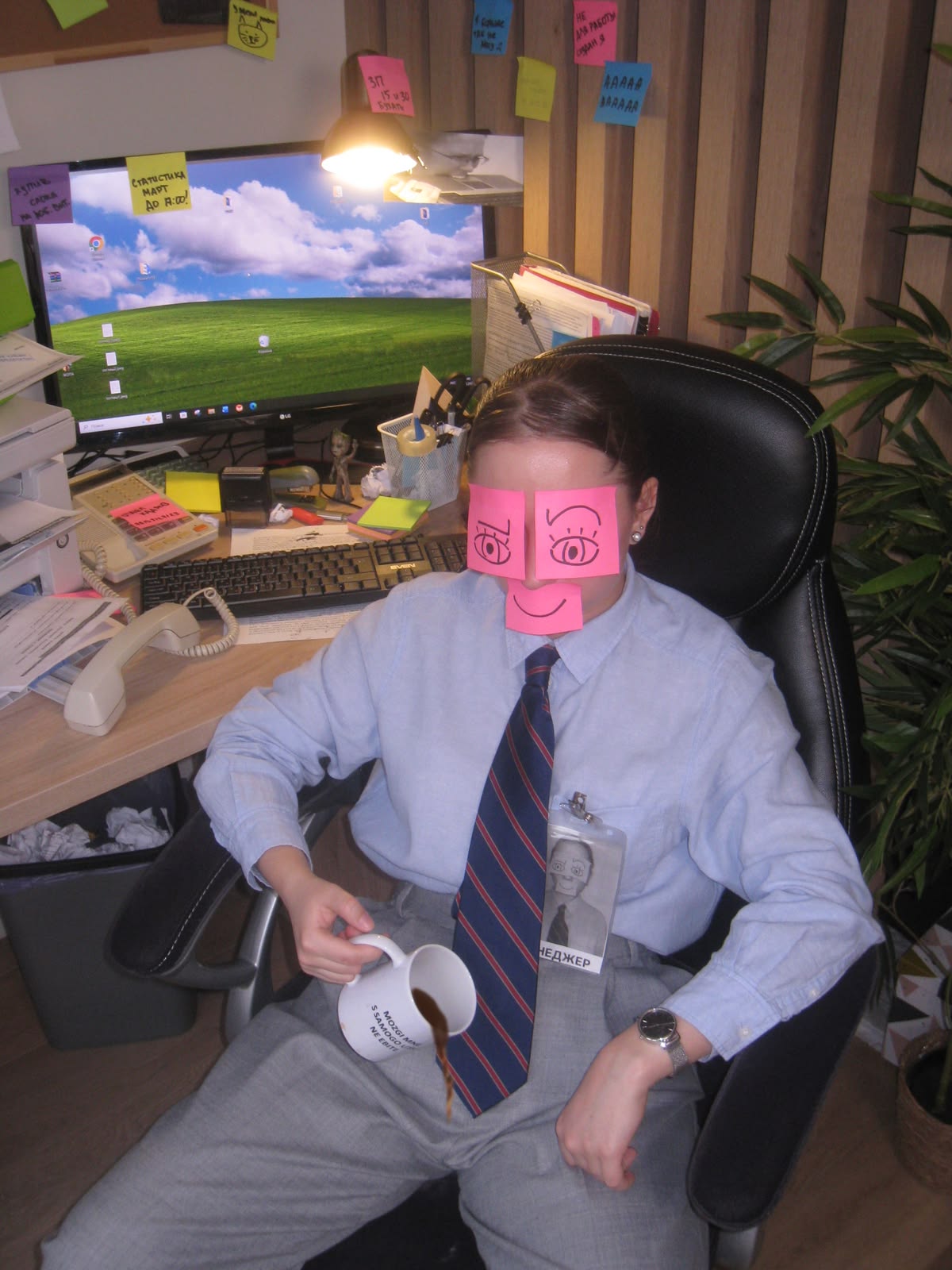
There's a reason some of these habits are so hard to let go of. For a while, they work. When there are five of you and something needs doing, someone just does it. You stay late because there’s no one else to do it. You jump in because you know how to fix it. The problem is when those temporary ways of working quietly become permanent ones.
The difficult part is noticing when it happens, and if Fiona's "often!" is anything to go by, you'll be noticing it more than once. You can care just as much and still build a way of working that doesn't ask people to run themselves into the ground. The raise will still make the feed, and so will the new hire and the record month (we'll keep posting those, obviously). The normal Tuesday probably won't. We'll be over here trying to have more normal Tuesdays, and trying very hard not to check our emails past 5.30pm.
***
LUNA × We Are Charlotte